How old is Ann?
From “Topics of the Times,” New York Times of 1924-11-17:
The amount and quality of intelligence utilized in the working out of cross-word puzzles almost precisely equal those that were revealed some years ago when an amazing — and discouraging — army of Americans filled the newspapers that cater to such folk with triumphant solutions of an arithmetical problem concerning the age of a supposititious Ann — a problem that any eighth-grade boy or girl who is “all there” should have solved in his or her head in about thirty seconds.
The older I get, the more sense it makes when the phrase “some years ago” turns out to refer to something from two decades back. The problem, apparently first published in the New York World circa 1903-10-09,[1] goes like this:
Mary is 24 years old. She is twice as old as Ann was when Mary was as old as Ann is now. How old is Ann?
(A writer to the Montgomery (Alabama) Advertiser of 1903-10-24 points out that you can get the apparently-most-common wrong answer if you read the puzzle incorrectly as “She was twice as old as Ann was when Mary [sic] was as old as Ann now is.”)
The New York Evening Post (quoted in the Princeton (Minn.) Union) opined:
“Wherever it may have originated — and this is itself a matter of controversy — the problem concerning the ages of Ann and Mary has caught the country’s fancy as few such things have since ‘Pigs in Clover.’ ”
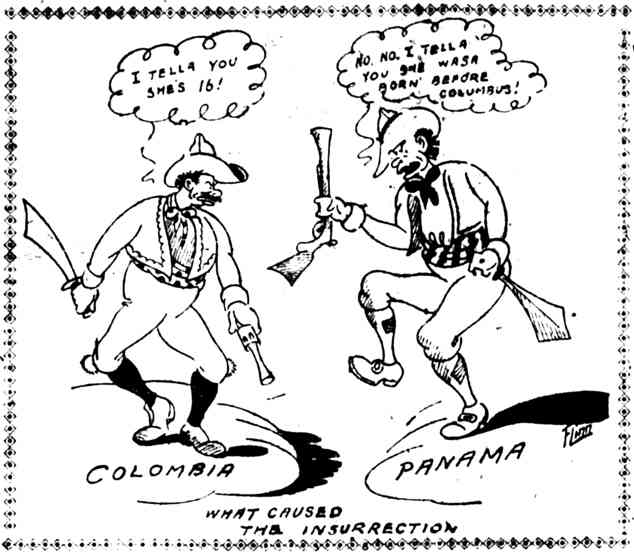
Billboard (1904-02-20): “The question ‘How Old Is Ann?’ has been dramatized and was staged at White Plains. Barney Gerard, the author, makes Ann a mischievous little girl, who refuses to go to school. The school authorities get after her to punish her but must first find out how old she is. Complications result.” • The New York Evening World (1903-11-17): “ ‘How Old Is Ann?’ is the title of a new song which Frank Daniels sang last night at the Victoria Theatre. When the opening lines sounded the audience settled back in its seats with a sigh of relief. ‘At last,’ it meant just as if it was expressed in words, ‘we are going to find out how old that cussed sister of Mary is.’ But they didn’t, and there’s where the fun came in. The song has a rattling chorus and a catchy tune.” • Cartoonist Ed F. Flinn fingered Ann as the cause of the Panamanian secession. • The World of 1903-11-07 “revealed” the perpetrator of the problem as one “Mr. Perkin Warbeck, of Newark, N.J.”
The Philadelphia North American published “the answers of a few leading Philadelphians.”
“I don’t see why that simple question is puzzling anybody. I knew Ann is 12 years old as soon as I saw the problem,” said Frank R. Shattuck. “There is no other solution, I tell you. Look here, I’ll explain it to you. Mary is 24 years old. She is twice as old as Ann — that’s a cinch. Of course, then, Ann is half Mary’s age, or 12 years. There ought to be a comma after ‘Ann,’ though.”
It was suggested to Mr. Shattuck that there was no comma in the problem.
“Doesn’t make any difference,” replied he promptly. “Let’s see — twice as old as Ann ‘was.’ That ought to be ‘is’ — as Mary was when Ann is. I’m not mixed up. I tell you, Ann is 12.”
Not to be outdone, the New York Evening World published on 1903-11-09 and 1903-11-10 the answers of “many prominent men of New York,” including:
Policeman Bert Gallagher: “Ann is old enough to know better than not tell her age when she knows how much trouble her silence is causing. She ought to be ashamed.”
John T. Meehan: “Ann was ninety years old. I know, because she and her brother shook hands with Lafayette on his visit to New York in 1824. Old Peter was the steward of the beanery for forty years, and he was ninety-two when he died; Ann was three years younger. He and Ann used to sell newspapers on the Vesey Street corner during Jackson’s first term. Why, Ann was— Oh, that World question about the girl who’s twice as old as herself? I haven’t time to fuss with that. I thought you were talking about old Peter Rose’s sister Ann.”
Timothy P. Sullivan: “Just twice as old as she was when Mary was twice as old as Ann. That’s easy. Six years ago Mary was eighteen and Ann was thirteen. To-day Mary is twenty-four and Ann is nineteen. Figure it out for yourself. Don’t you see that if Mary is twice as old as Ann was when Mary was— I mean twice as old as Mary when Ann was half as old as Mary, consequently— but there, let the professors figure it out. It’s as bad as ‘when is a mice when it spins.’ ”
The Wyoming Tribune of 1903-10-28 calls it “No Puzzle At All”:
Anyone could figure it out if they would stop to think. Ann is 16, of course, because if Mary is twice as old as Ann was, all you have to do is to find out when. Now she is 24, Ann’s age was 12, or twice six. Mary is now four times six, which being divided by six, gives four. Add this to twelve, and there you are. —Smith.
adding:
When Mary had a little lamb, she was twice as old as Ann was when Ann was as old as Mary now claims to be. How old is the sheep? —James Barton Adams.
A correspondent for the Kansas Journal wrote:
Constant Reader,
Ann is sixty-three years of age. Obviously, Ann is as old now as Mary was when Mary was half as old as her present age less the age of Ann at the time she was half as old as Mary was when she was twice as old as Ann is, unless you figure that Ann was half as old as if she were twice Mary’s present age, less Ann’s age when she was twice as old as Mary is now, or twenty-four. Twenty-four and fifteen are thirty-nine, and twenty-four and thirty-nine are sixty-three, which represents Mary’s present age subtracted from half of Mary’s age at the time she was half as old as Ann. I would not solve this problem for any one but a constant reader.
The Washington Times of 1903-10-27 prints an anonymous poet’s take:
I used to be contented and took comfort in my life,
I dwelt in deep placidity, removed from care and strife,
I never worried as I jogged along my even way,
I worked a bit, I slept a bit, and still had time for play;
I never had such things as nerves; my brain was clear and cool,
But now I am a nervous wreck, and soon will be a fool.It came about in this wise: One fell day a genial friend,
Whose mind is full of whist and chess and problems without end,
Propounded in a guileless way a problem which, to scan,
Seemed simple: All you had to do was find the age of Ann.
Now, Ann is Mary’s sister, which you’ve no doubt heard before,
And Mary— it is impolite, but Mary’s twenty-four.Now, Mary’s twenty-four, and she is twice as old today
As Ann was when her sister was — that is, of course, to say,
When Mary was — as old as Mary’s sister Ann is now.
Which brings the question up to you: What’s Ann’s age, anyhow?
That’s what my friend propounded, and I answered, at a pinch,
“The problem you propound, sir, is dead easy — it’s a cinch.”I worked all day upon it, and I also worked all night,
But somehow that confounded thing would never come out right:
At first I figured it that Ann was twelve, then eight, then ten,
And then I twisted it around and worked it out again.
This time I learned, to my dismay, that figures disagree:
That although Mary’s twenty-four, her sister’s sixty-three!I raved and swore; my hair I tore; I vented all my spleen
Upon some luckless wight who said that Ann was sweet sixteen.
I’ve worried nights, I’ve worried days, I cannot eat my meals;
I jabber those confounded words until my poor brain reels;
If this thing keeps up many moons, good-bye, old world — farewell!
For me ’twill be the welcome grave, or else the padded cell.
(A less entertaining, but more democratic, sampling of “Ann” correspondence appears in the Evening World of 1903-11-11.)
The craze was short-lived. By 1903-12-21 “Prof. Josh M. A. Long” of the Society for the Prevention of Cruelty to Humor was advertising in the World for any information as to “the whereabouts of ‘How Old Is Ann?’ Has been missing about ten days. Recently released from the Old Jokes’ Home, last heard of in Harlem.”
Footnote: Or in the New York Press of 1903-10-12, signed “John Mahon,” if you believe a column from 1937 (Bellefonte (Penn.) Democratic-Watchman 1937-11-26; South Hill (Va.) Enterprise 1937-12-23). Or maybe the Press of 1903-10-16 (Highland (Va.) Recorder 1951-10-05).
But the true story, as relayed by William J. Lampton in a Scrap-Book article titled “The Vicissitudes of a Problem” (August 1906) is that “How old is Ann?” first appeared in the Newark Evening News of 1903-04-21, headlined “Stories of the Town.” The author was one Robert D. Towne; and when the meme didn’t catch at first in Newark, he tried again, Lampton says, by sending it to the Philadelphia North American and signing it “Perkin Warbeck.” Towne certainly let it be known that he was the “Ann” man (1, 2, 3), earning his obituary a spot among Time magazine’s “Milestones” of 1952-03-03.
Now hear this, from the Sequachee Valley (Tenn.) News of 1903-10-29:
A man is twice the age his wife was when he was the age she is now. When she reaches his present age, their combined years will be 100. Find the age of each.
See also:
- “What is 8÷2(2+2)?” (2019-08-01)